




REPORT ON THE VISIT OF THE SUNDANESE CUSTOMARY COUNCIL (MASDA) OF WEST JAVA TO CIREUNDEU INDIGENOUS VILLAGE
0 menit baca

Cimahi, June 24, 2026
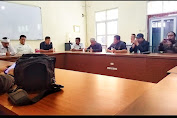
A delegation from the Sundanese Customary Council (Majelis Adat Sunda/MASDA) of West Java, led by Inspector General of Police (Ret.) Dr. Drs. H. Anton Charliyan, M.P.Kn., widely known as Abah Anton Charliyan, conducted a cultural goodwill visit to Cireundeu Indigenous Village, located in Leuwigajah Village, South Cimahi District, Cimahi City, West Java.
Abah Anton was accompanied by members of the MASDA West Java Executive Board, including Uwa Deden, Bah Iwan, Raden Dicky Z. Sastradikusumah, Rd. Berry, Jayengrana Wirasantana, along with other MASDA officials and members.
The delegation was warmly welcomed by the Indigenous Council, represented by Panitren Adat Abah Asep Abbas, Ais Pangampih Abah Widi, Kang Didi (Head of Cultural Affairs), Kang Domba (Head of Arts Affairs), and other customary leaders.
The visit aimed to strengthen cultural ties, explore the community's cultural potential, and identify challenges faced by the indigenous community in preserving their traditions, culture, environment, and improving community welfare.

Indigenous Community with Cassava-Based Food Security
Cireundeu Indigenous Village is one of the few Sundanese traditional communities that has consistently preserved its ancestral heritage.
Its most remarkable characteristic is its cassava-based food security system.
Since approximately 1918, the community has consumed Rasi (Cassava Rice) as its staple food instead of conventional rice. Around 1924, the processing technique was further refined by the respected elder Omah Asnanah, producing cassava rice with exceptional taste and quality.
During the visit, the MASDA delegation had the opportunity to sample the traditional cassava rice and described it as remarkably delicious.
The community's reliance on cassava originated from historical geographical conditions, when limited irrigation made cassava the most sustainable crop to ensure long-term food security.
The people of Cireundeu continue to uphold their guiding philosophy:
"Ngindung Ka Waktu, Mibapa Ka Jaman,"
which means embracing the progress of the modern era while remaining firmly rooted in ancestral customs and cultural values.

Another well-known local philosophy states:
"Better not to cultivate rice fields as long as one has paddy; better not to have paddy as long as one has rice; better not to have rice as long as one can still cook; better not to cook as long as one can still eat; and if one cannot eat, one must remain strong."
This philosophy reflects resilience, adaptability, and food self-sufficiency.
Historical Background
The name Cireundeu originates from the Reundeu tree, which once grew abundantly throughout the area.
The community also embraces the philosophy:
"Sareundeu, Sabobot, Saigel, Sapihanean,"
which symbolizes unity, solidarity, harmony of thought, consistency between words and actions, and the spirit of mutual cooperation.
The village is believed to have been established by Mama Aki Haji Ali during the 19th century.
Indigenous Territory
The customary territory covers approximately 64 hectares, consisting of:
- Indigenous residential area: 2 hectares
- Sacred protected forest (Leuweung Larangan): 3 hectares
- Conservation forest (Leuweung Tutupan): 35 hectares
- Community cultivation forest (Leuweung Garapan): 24 hectares
Population
The indigenous community consists of approximately 1,500 residents in 360 households, with around 60 households (130 people) continuing to strictly observe traditional customs and ancestral practices.
Traditional Leadership Structure
The customary governance consists of:
- Chief Elder (Sesepuh Adat)
- Ais Pangampih
- Panitren Adat
- Community Leaders
- Arts and Cultural Coordinators
- Indigenous Youth
- Community Members
All important decisions are reached through consensus and the spirit of mutual cooperation.
Infrastructure Conditions
The MASDA delegation identified several areas requiring further attention, including:
- Improvement of village roads;
- Better management of the cultural tourism area;
- Development of educational tourism facilities;
- Rehabilitation of drainage systems and agricultural irrigation.
Livelihoods
Most residents work as:
- Farmers
- Plantation growers
- Traditional artisans
- Micro, Small, and Medium Enterprise (MSME) entrepreneurs
- Cultural artists
- Tour guides
- Local traders
Their flagship products include:
- Cassava Rice (Rasi)
- Various cassava-based food products
- Traditional handicrafts
- Cultural tourism products
Belief System
The community continues to preserve the spiritual values inherited from their ancestors through the Sunda Wiwitan indigenous belief system.
Traditional Prohibitions (Pamali)
The customary rules still observed include:
- Prohibition against cutting trees in protected forests;
- Sustainable use of natural resources;
- Maintaining ecological balance;
- Respecting elders and ancestors;
- Abstaining from consuming rice as a staple food.
Traditional Ceremonies
The community continues to organize various customary ceremonies, including:
- Hajat Bumi (Earth Thanksgiving Ceremony)
- Seren Taun Harvest Festival
- Ancestral tribute rituals
- Traditional education in Sundanese customs, arts, and script.
Traditional Arts
The community actively preserves traditional arts, including:
- Karinding
- Kacapi Suling
- Angklung Buncis
- Degung Orchestra
- Traditional Sundanese Dance
- Kaulinan Barudak (Traditional Children's Games)
Traditional Architecture
The MASDA delegation noted with concern that the original Cireundeu traditional houses—once entirely constructed from wood, bamboo, and palm fiber without brick walls or electricity—no longer exist due to the pressures of modernization.
This situation deserves serious attention, as rebuilding an authentic traditional house would serve as an important cultural education center for future generations.
Indigenous Land Ownership
Although the customary territory remains largely preserved, the Cireundeu Indigenous Community has not yet secured communal customary land (Tanah Ulayat) as collective ownership.
Most land parcels have become privately owned, while only approximately 3 hectares of protected forest remain under communal customary control.
This issue has become one of the community's primary concerns regarding the long-term sustainability of indigenous life.
Community Aspirations
During discussions with the MASDA delegation, community representatives expressed several priorities:
1. Assistance with traditional musical instruments and cultural costumes.
2. Support for agricultural seedlings, livestock, fisheries, fertilizers, and irrigation systems.
3. Improvement of village roads and the entrance gate to the customary village.
4. Acquisition of communal customary land (Tanah Ulayat).
5. Development of a nature and cultural education center.
6. Strengthening the marketing of cassava-based MSME products.
7. Reconstruction of authentic traditional houses complete with traditional rice barns (Leuit), Saung Lisung, Bumi Alit, Bumi Ageung, and Balai Sawala.
8. Environmental enhancement of the Indigenous Village as a well-preserved cultural park.
Conclusion
The Sundanese Customary Council (MASDA) of West Java considers Cireundeu Indigenous Village to be one of the most valuable cultural assets of the Sundanese people, particularly for its successful preservation of indigenous traditions, cassava-based food security, environmental conservation, and local wisdom.
Nevertheless, several important issues require collaborative attention, including the absence of communal customary land rights, the disappearance of authentic traditional houses due to modernization, infrastructure development, strengthening local MSMEs, and ensuring cultural regeneration for future generations.
MASDA West Java calls upon the government, the private sector, academic institutions, and all stakeholders to work together in safeguarding and preserving Cireundeu Indigenous Village so that it remains a living heritage of Sundanese civilization for generations to come.


